Showing posts with label carrots. Show all posts

Tuesday, March 17, 2009

Making Progress

Remember my New Year's resolutions? I'm not doing so well with the tea, but I am making progress with the fish. Last week I stocked up on frozen fish fillets, buying swai (Asian river catfish) and Cape Capensis (South African hake). I realize that both selections are about as far from local as you can get; I've got to do some research and see if I can find a store that sells affordable, local fish. In the meantime, I've got enough fish for the time being to last several weeks; I'm trying to start us off at fish dinner once per week and work our way up to twice weekly. Hopefully then we can maintain the habit.


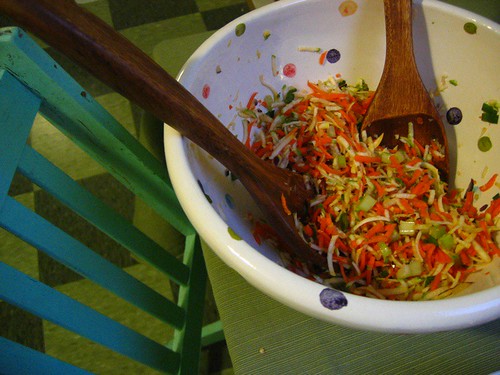
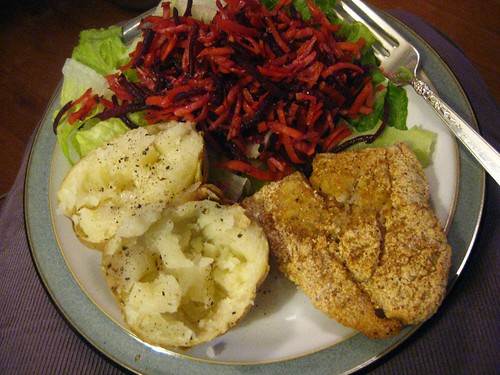
I dipped the swai in a blend of fine cornmeal and Old Bay seasoning, then baked it at 450 for about twenty-five minutes - until cooked through and flaky. I also baked some potatoes from our latest CSA share and served the shredded root veggie salad on a bed of romaine. The fish was okay, but a little bland. I'm looking for more interesting ways to cook it, since it's apparently not the most flavorful fillet. Any ideas? I'm open to suggestions.

P.S. Happy St. Patrick's Day! Last year I made corned beef and cabbage. This year I'm making barbecue ribs, for no particular reason at all.

Wednesday, March 11, 2009

I yam what I yam...

... and that's a lady who loves her spinach. Baby spinach, especially. Fresh, local, organic baby spinach for the first time in months! This salad was amazing - just spinach, a shredded carrot, and some sprouts with a very lemony dressing (lemon juice + salt + EVOO). I had some last night with homemade cheese pizza (this dough recipe is still amazing - I made another quadruple batch yesterday and froze three extra balls).


I buy shredded mozzarella in a big two-pound bag for $7.99. Two pounds yields approximately eight cups, which is enough for at least eight pizzas, depending on how cheesy I'm feeling. I use tomato puree (one 28oz can has enough for at least twelve pizzas) and I buy the flour and yeast for the dough from the Coop bulk bins, so pizza is a very cheap meal (and if you go easy on the cheese, it's pretty healthy paired with a salad). Each pizza provides dinner and lunch the next day for the two of us, so I'd wager it comes out to less than fifty cents per serving. Even when we have to buy lettuce from the grocery store, I'm pretty sure pizza and a salad comes out to around $1.00 per serving. Definitely thrifty, tasty, and easy!

Tuesday, March 10, 2009

Winter CSA - March

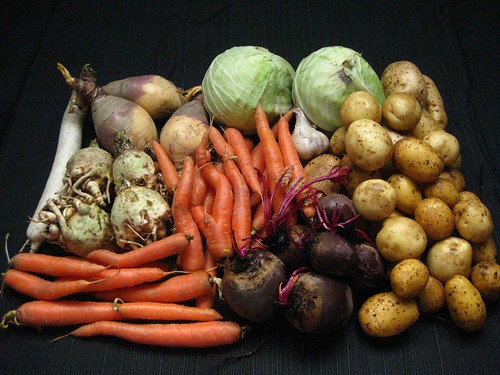
Here's the March share that we picked up a few days ago. Notice anything... unusual?


That's right! GREENS!!! That's a bag of fresh baby spinach in the top left. Thank goodness for greenhouses (the ground's still frozen here). There's also a bag of alfalfa-radish sprouts, which have a slightly spicy bite. Other than that, we've got the winter usual - potatoes, carrots, daikon, celeriac, beets, and rutabagas. A few of the potatoes are huge, so I'm thinking they are good candidates for baking. Maybe we'll top them with some veggie chili.

Does anyone have any rutabaga recipes to share? I'd like to try something a bit different with these. I'll use most of the carrots, celeriac, and beets to make more of that amazing shredded salad, and I'm toying with a few different options for the daikon.

Wednesday, February 18, 2009

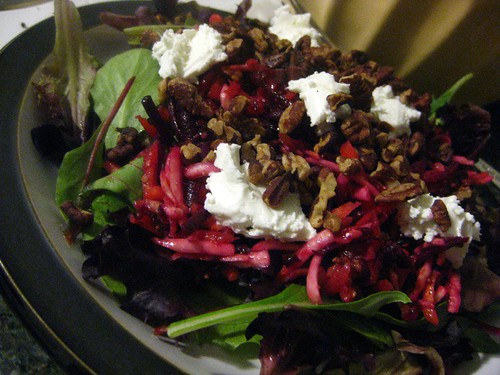
Salad Days: Root Veg with Chevre and Toasted Pecans

This week's salad is without question the best salad I have ever had. The recipe for the shredded root veg slaw came via email from a fellow CSA member after several people had asked for recommendations on how to deal with all the root veggies. The root veg mix is delicious and keeps well in the fridge for several days; I've enjoyed having it on hand so I can serve it as a side dish, add some color to a tossed salad, or, as in this case, make it the centerpiece of a hearty salad entree.

We enjoyed this salad on Friday the 13th as part of our early Valentine's celebration, since we had plans with friends on the day itself. For the past few years, our Valentine's routine has been to pop a bottle of champagne, order Thai or Chinese, and make creme brulee (Dan's favorite). However, this year, since we're trying to spend less, I nixed the takeout and budgeted $10 for good cheese instead, planning to serve it along with a salad. We also postponed the creme brulee since this month is packed with desserts already (some of which you've already seen).


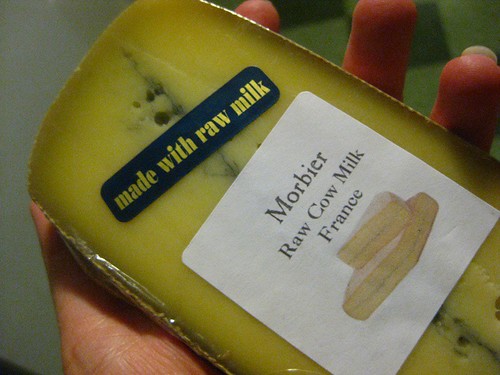
Picking the cheese was hard because there were so many amazing selections at the Coop. I went in thinking I'd like something local and made from raw goat's milk. Since we live right on the border with Vermont, the local options are abundant. However, some of the imported cheeses looked so tempting that my resolve wavered. Ultimately, I decided to split the budget, selecting one imported, semisoft, raw, cow's milk cheese and one local, soft, pasteurized, goat's milk cheese. We snacked on the imported cheese, a Morbier from France, while I grated the veggies for the salad and Dan did the dishes. Morbier is a creamy, slightly bitter cheese with a pungent smell but a mild and faintly nutty taste. It is made of two layers, separated by ash; traditionally, farmers would pour leftover curds from Gruyere de Comte in to a mold in the evening, then cover it with a layer of ash to preserve it, and top it off with more curds from the next morning's batch. Now it is generally made from one batch but the ash layer is kept for tradition. We both enjoyed this cheese very much, but I'm not sure I'd buy it again soon; there are just too many cheeses out there that I haven't tried yet.


The local chevre went on top of the root veg slaw, along with some toasted pecans, all with a bed of mesclun. The combination was simple but fantastic. You know how when you taste something delicious, the first few bites taste the best, but then you sort of get used to it? That didn't happen with this salad. With every bite, I was surprised; every forkful was bursting with flavor and new taste. I think it's just the perfect balance of earthy, tangy, sweet, and nutty flavors, and the mix of textures - smooth, crunchy, crisp - offers so much variety that it stays interesting even if you eat a huge platter. We've already repeated this salad and I know it will become a regular menu item for us.

Judi's Winter Root Salad

8 cups grated root vegetables (beets, turnips, carrots, daikon, celeriac, etc., plus one garlic clove)
1 tablespoon Dijon mustard
2 tablespoons olive oil
1.5 tablespoons vinegar

Mix it all together. Lasts in the refrigerator for several days. I omitted the garlic and used a German stone-ground mustard instead. I only used beets, carrots, and celeriac in mine. Grating all these veggies by hand would be a pain (literally, for my bad wrists); my yard-sale Salad Shooter does the trick in two minutes.
Best Winter Salad

4 cups mesclun (rinsed and spun)
3 cups Judi's Winter Root Salad
2 oz chevre (about half a small log)
1/3 cup chopped pecans

Set oven to 300. Spread pecans on an ungreased cookie sheet and toast in oven until they smell wonderful (about eight minutes). Divide mesclun between two plates. Scoop half of the root veg slaw on to each plate. Top each serving with dollops of chevre and toasted pecans. Serves 2.
Monday, February 9, 2009

Winter CSA - February

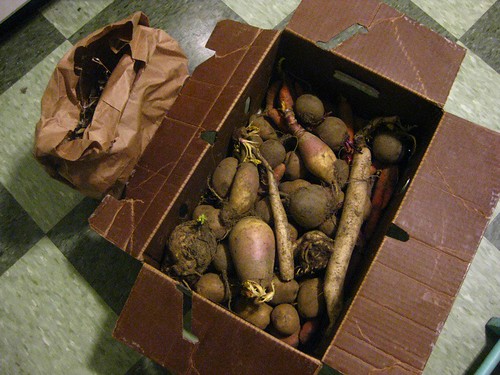
No pretty produce shots this time. I haven't had time yet to scrub and sort the veggies, and I wanted to take a picture before we start using it up (in fact, I grabbed a beet and a carrot for tonight's salad immediately after taking this pic). Plus, a more rustic view might be good for a change. After all, this is how we receive it: tumbled together and covered with dirt. The summer deliveries are usually cleaner but the winter veggies are stored in dirt-filled bins at the farm.


I mentioned recently that it's time to sign up for 2009 CSAs. This goes for most winter CSAs as well. While we are certainly signing up for another summer share, we've decided to pass on the winter share. The first month was amazing, but the rest of them have been like this (only with cabbage). We haven't made the best use of our share and have thrown out more gone-by produce than I care to admit. The sad fact is, I just can't handle so many root vegetables. (My Scandinavian and Irish ancestors are now rolling over in their graves.)

Where we live, nothing else is available locally in the winter, so other than the fresh lettuce for our salads and the occasionally indulgence of imported fruit, we've been relying on frozen vegetables. Some are summer share surplus that we froze for exactly this purpose; others are bags that we've purchased at our local grocery store. Frozen seems to work well for us. While I feel bad about the food we've wasted from the winter CSA, we've learned an important lesson - a winter CSA is just not for us. (Now, I'd be singing a different tune if we lived in say, California, and a winter share included fresh citrus and greens - but alas, we live in a land of thrice-weekly blizzards.)

So the plan for this year is to sign up for our summer share - once again, a small share from Luna Bleu Farm - and to take the money that would go for a winter share and designate it for farmer's market purchases. That way, when our favorites like kale and spinach are in abundance, we can buy a lot and immediately freeze it for winter use.

Thursday, January 29, 2009

End-of-the-Month Soup

My camera battery is dead and the charger has disappeared, so the picture for this post is currently trapped on the camera. I'll upload it as soon as I can.

ETA: Woohoo! Charger recovered, battery charged, picture posted!


You may have noticed that I skipped the Salad Days post yesterday. It wasn't an oversight, and I'm not canceling the Salad Days series. In fact, I didn't do a salad entree this week for a very simple reason: we had run out of fresh greens, but we still had plenty of other ingredients on hand, and since it's the end of the month and I wanted to stick to our January budget, I decided not to buy more salad greens this week. So, no salad entree. Instead, I made a simple vegetable-bean soup. The carrots that we got at the beginning of the month from our winter CSA had gone a bit soft, so they weren't great for crunching raw, but they would work just fine in a soup. Ditto for the celery we bought a couple of weeks ago. These withering vegetables made the basis for a tasty, satisfying, and very cheap meal. I served it with some homemade focaccia - a first for me, and since I'm not fully satisfied with that recipe yet, I'm not posting it here.

End-of-the-Month Soup

2 teaspoons olive oil
1 medium-size onion or 3-4 shallots
3-4 cloves garlic
3-4 carrots, chopped
4 stalks celery, chopped
4 small potatoes, diced
2 cups cooked chickpeas (frozen or canned okay)
28oz can tomatoes (whole or diced)
broth, any flavor (optional)
2 teaspoons Italian herb blend
salt and pepper to taste

Heat the oil over medium-low heat in a large soup pot. Add the onions and garlic and cook until onions are translucent. Add the carrots and celery and cook, stirring occasionally, for another 3-5 minutes. Add potatoes, chickpeas, tomatoes, and spices. Fill the now-empty tomato can with water and add the water to the pot. You can substitute stock for some or all of the water. I used some water, plus a small wedge of frozen concentrated turkey stock that I made with Thanksgiving leftovers. Bring to a boil, then reduce heat and simmer, covered, until potatoes are tender.

This is just a very basic bean and veggie soup and you can easily substitute whatever you have on hand. This would be great with fresh or frozen broccoli, cauliflower, and corn, too. I used chickpeas straight from the freezer, but you could also us canned chickpeas or any other kind of bean (black, kidney, etc.).

A note on carrots: if your carrots are organic, or if you're not concerned about pesticides, don't peel them first - just scrub them well. The carrot skin has a lot of great fiber in it that gets lost when you peel. The same goes for the potatoes.

Also, a note on canned tomatoes: yesterday I said that canned vegetables aren't the best and today I'm writing up a recipe with canned tomatoes in it. What gives? Well, tomatoes are rare in that their nutritional content actually improves in the canning process. Tomatoes are rich in lycopene, an antioxidant which is less available to us in raw tomatoes. Heat helps break down the cell walls and release more lycopene, so canned or cooked tomatoes actually offer more benefits than raw ones.

Monday, January 12, 2009

Here it is! Winter CSA, Month 3

We picked up our January share at the monthly indoor winter farmer's market in Norwich, VT. It's nice that it continues through the winter, but it's not nearly as interesting as the weekly summer market. In winter, we basically go just to get our share (and maybe a scone and a cup of coffee for the road). We're in and out in fifteen minutes, tops. At the summer market, however, there's so much more to look at and there is usually live music, as long as the weather is good. We like to take our time, check out all the booths, and do a few laps.


Anyway, January's share is not too bad. No more parsnips (woohoo!). The rundown:

-two cabbages
-four rutabagas
-four celeriacs
-six beets of varying size
-one enormous daikon radish (it must be at least 15" long!)
-about four or five pounds of carrots
-about five pounds of potatoes, some small (great for roasting) and some large (great for baking)
-one random bulb of garlic thrown in at the last minute

We also purchased some fingerling potatoes. Yes, five pounds of potatoes is plenty for the two of us for a month, but I just can't resist those wonderful fingerlings. I toss them with olive oil, salt, pepper, and herbs, and roast them until the skin is golden and crackling and the flesh is meltingly soft.

I think this is a good assortment. I'm working on a new carrot soup recipe, and the daikon will come in handy when I make something from one of my Japanese cookbooks (per my resolution). We used to eat rutabagas a lot when we lived in London, although we didn't know it at the time: the Brits call them "swede," and we used to get this pre-chopped carrot & swede blend that we could steam or roast. I'll have to do a little research on new (to me) ways to prepare them. I'm also looking for new beet recipes; I usually roast them, but the antioxidant levels drop when exposed to heat, so I'd like to add some raw beet recipes to my arsenal.

Anyone have any good root vegetable recipes to share?


Friday, January 9, 2009

Winter CSA, Month 1

I have been remiss in posting pictures of our winter share. This is a shot of the first winter share, which we picked up in early November:


Pretty incredible, isn't it? And yes, those are my pink-stockinged feet in the corner. I had to stand on a chair in order to get far enough away to get everything in frame. And this isn't actually everything: we also had a huge bag of onions, shallots, and garlic bulbs (to last throughout the winter), a bunch of dried rattlesnake beans, still in the pods, and as much basil as we could pick.

The basil was turned into pesto and frozen in cubes; likewise, I roasted most of the squash and steamed all of the kale to freeze for future use. I have a few pictures of meals made from this harvest, which I will post eventually. A lot of my pictures from this time did not turn out very well. The days were getting shorter and the light more elusive, and by mid-November, it was usually dark out before I even started cooking dinner.

What about month 2, which we picked up in early December? Well, I never photographed it. As I mentioned, I kept getting sick, and I was very busy, and frankly, what we got in month 2 was just not as pretty. Think parsnips. Lots and lots of parsnips. Plus carrots, potatoes, and more cabbage than I will ever know what to do with. We still have some cabbage in the fridge, and we're going to pick up month 3 tomorrow!

Check back Monday for a picture of tomorrow's haul, and have a wonderful weekend.

Monday, December 22, 2008

Year in Review: Thanksgivings

When it comes to holidays, we are a family cemented to tradition. Change and innovation do not come lightly. Something as a simple as the suggestion of a change to the Christmas Eve menu has been known to cause actual rioting. So it's no surprise that on Thanksgiving, our table has always been filled with traditional fare: turkey, of course, plus gravy, mashed potatoes, sweet potatoes, turnips, cranberry sauce, dinner rolls, and roughly one 9" pie for every two people in attendance. Delicious, indulgent, tryptophan-triggering? Of course. But I felt something was missing: the color green. So I asked my mom, who hosted this year's get-together, if I could bring brussels sprouts.


As I mentioned in my review of The Harrison, I love brussels sprouts. This is not an enduring affection but rather a newfound passion, still young and bright and wallowing in the puppy-love stage. You see, prior to this fall, I had never tasted brussels sprouts. Never. But we got some in our CSA one week and for me, it was love at first bite.

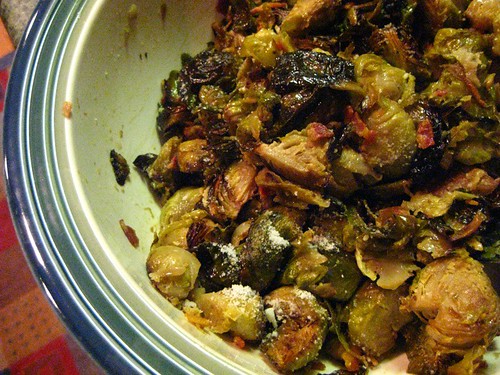
For Thanksgiving, I sliced three pounds of loose sprouts in to halves and roasted them with a little olive oil at 400 degrees for about forty minutes. The outsides turn dark, nearly black, but the inside becomes a soft, creamy treat. I tossed the roasted sprouts with crisped pancetta, grated parmesano-reggiano, and some lemon juice. The sprout eaters at the table were very satisfied, and I got to eat the leftovers for days.

Incidentally, this year there was another green dish: Aunt Liz's spinach casserole, which is absolutely delicious. I'm going to get the recipe from her and will write about it in a separate post soon after I do.

You may have noticed the s in the title and thought it a typo. It's not; this year, we were blessed with two Thanksgiving dinners, as my in-laws decided to push their celebration up a few weeks and have a Thanksgiving dinner with all the trimmings in late October, to coincide with a visit from Great-Aunt Rose. The menu was similar to that at my mother's, with a few variations. Lynn, my mother-in-law, makes an awesome homemade cranberry sauce (while my side of the family is married to the canned kind). Also, because Lynn is Armenian, instead of mashed potatoes, she serves pilaf. (Pilaf holds a very special place in my husband's heart, so years ago I secured his mother's/grandmother's recipe; when he asks what's for dinner and my response includes pilaf, I'm guaranteed praise for days.)


For this early Thanksgiving dinner, I made a carrot cake with cream cheese frosting and busted out my piping tips to add some old-school decorations. The pattern was not planned: I just went where the frosting took me, which was apparently back to the 1970s, as the bright orange frosting, inspired by the frosting carrots that top bakery carrot cakes, reminds me of nothing more than the orange formica countertops in the chalet my family once owned.

The carrot cake (based on this recipe -- I skipped the pineapple and used whole wheat flour) was moist and delicious and I had fun making it. My decorating skills have deteriorated, though, so I might have to start using my piping tips more often.


Tuesday, November 18, 2008

Out of the Box: Final Week of the Summer


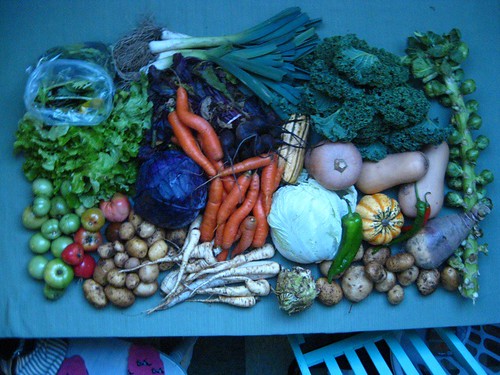
Our CSA "summer" share actually lasted well in to October. Here's a shot of our final weekly pickup, which included potatoes, beets, celeriac, leeks, rainbow chard, dinosaur kale, cabbage, carrots, butternut squash, delicata squash, broccoli, and brussels sprouts.

Both the butternut squash and the kale I cooked and then froze for later use. Everything else I used in various dishes that I will post about over the next week or so, except for the celeriac, which I still haven't used! Luckily it's a root vegetable and keeps very well.

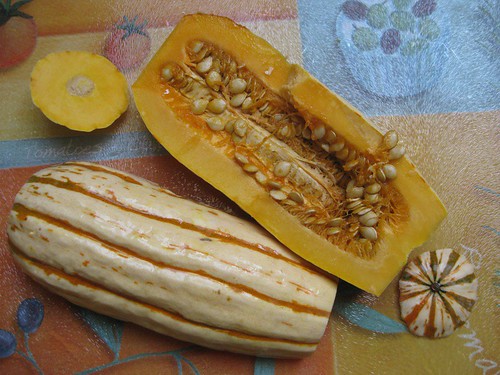
Here's the delicata squash after I sliced off the ends and cut it lengthwise, but before I scooped out the seeds. We received delicatas several times over the summer; the first time, I roasted the two squash halves with some water in the pan, and the result was indeed very delicate, with the texture of a very soft puree and a taste reminiscent of apples and pears. I also tried a delicata and gruyere soup, which was a huge disappointment: it was somehow too bland and too sweet at the same time (to me, anyway; Dan enjoyed it, but he's easy to please).

With this delicata, I think I finally found a method that really brings out the best flavor of the squash. I left the skin on and chopped the squash in to small chunks, which I tossed with olive oil, salt, and pepper, and roasted at 400 degrees for about twenty-five minutes, stirring once or twice. The result was amazing: the flesh was tender, the skin crispy, and the salt and pepper provided a nice, kicky contrast to the natural sweetness of the squash.


I tossed the warm, roasted squash cubes with dried cranberries and toasted pine nuts and added a simple side salad with mustard vinaigrette. This was a very satisfying and delicious meal, and the leftovers were not leftover for long; Dan couldn't pass through the kitchen without grabbing a few more bites, and I certainly couldn't blame him.


Friday, October 31, 2008

Roasted Vegetable Soup

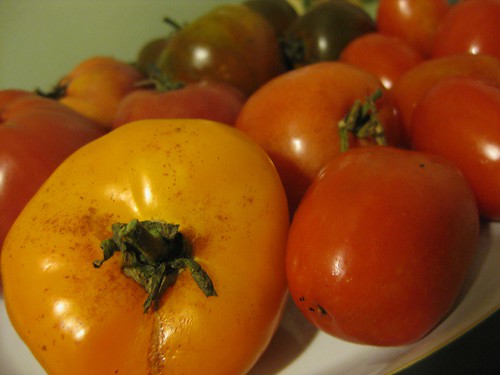
One of the best things about our CSA boxes this summer was the amazing array of heirloom tomatoes that came in August and September. My husband, Dan, is crazy about tomatoes, so most of them were eaten raw. As the weather started to cool, however, I wanted to try something a little different. I came across this roasted vegetable soup recipe while searching for a use for fennel and decided to give it shot. The method is incredibly simple and could work for almost any combination of vegetables. Basically, you roast the vegetables until soft, then puree them with some stock or broth and heat before serving. The first time I made it, I used leeks, carrots, and tomatoes, and the result was spectacular. Roasting the vegetables, rather than just boiling them, adds an incredible depth of flavor to a very simple dish. This recipe inspired me to create a new pasta sauce, which I'll describe in another post. I've since made the soup a few more times with different combinations, and it's sure to be a go-to recipe for me in the future.


Wednesday, October 8, 2008

potato-leek soup


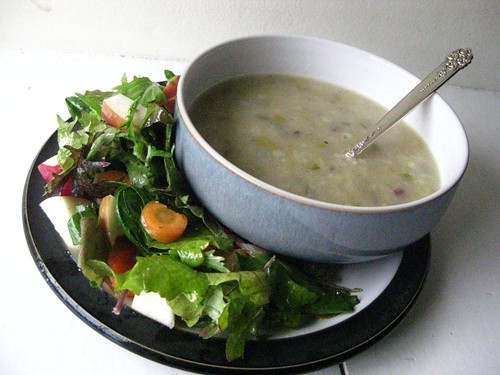
Remember the potato-leek soup in progress that I posted the other day? Here is a shot of the finished product from another batch. We had this for lunch on Saturday with a side salad of field greens, carrots, and Macintosh apples in Greek dressing.

POTATO-LEEK SOUP
2 leeks
5-6 medium russet potatoes
1 tablespoon olive oil or butter
1 can broth of your choice (I like fat-free, low-sodium chicken)
water
salt and pepper to taste

Wash the leeks thoroughly. Since dirt gets between the layers, I find the best way to do this is to cut the green part off, then slice the white part in half down the center and gently peel back the layers under running water, looking for clods of dirt. Slice the white parts thinly and saute them in butter or oil in a deep stock pot.

While the leeks are cooking, wash and thinly slice the potatoes. You can peel them first if you want, but the peel has fiber and adds a nice shot of color. Once the leeks are soft, add the potatoes and the can of broth. Add one or two cans full of water - enough to cover all the potatoes and leeks. Add chopped leek greens. Bring to a boil, then reduce heat, cover, and simmer for about 25 minutes, until potatoes are very tender. Remove from heat. Using a potato masher, break up the potatoes. If you want a really smooth soup, you could use a hand-held blender, but I prefer a slightly chunky texture. Stir to incorporate and season to taste. Makes four servings.

Monday, August 4, 2008

Out of the Box, Week 8

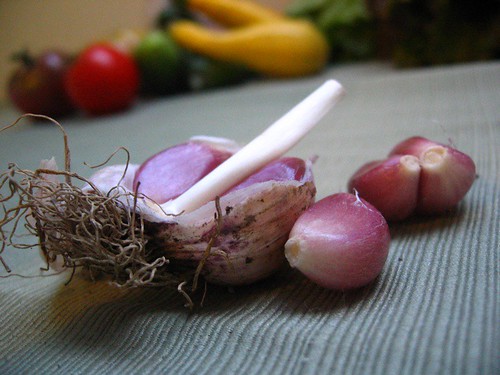
Last week, purple peppers; this week, purple garlic! Isn't it beautiful? This must be the garlic that sent off the scapes we got a few weeks ago. I just love this color.

Speaking of color, it's that time of the season when the box is packed with so many different colors (not just green, like we had in June). Of course we are still getting lots of lettuce (curly red stuff, this time), which is good since salads are such a staple in our house. We also got a huge bunch of basil this time as well as a big load of scallions. There's also fennel - another new food for me - and some cucumbers. Beets, carrots, tomatoes, and tender, little summer squashes add punches of color between all the green.


The first thing I tackled was the basil, since we still had some from week 7 and I didn't want any of it to go to waste.

I've heard that the best way to preserve basil is in oil and in the freezer, and pesto is probably the easiest way to do this. I whipped up a few batches of this on Sunday night, some of which went on our pizza. I put the rest in a plastic-wrap-lined ice cube tray so I could freeze it in small blocks, which I later transferred to a freezer bag. Now when we want pesto it will be easy to grab one or two cubes to thaw.

To make pesto, all you need to do is combine fresh basil and pine nuts (about one packed cup of basil and 1/3 c. pine nuts is a pretty good ratio). You can use a blender or a food processor; my mini-Cuisinart works great for this. Once the basil and nuts are well-blended, you need to add a little olive oil. Ideally, you want it to emulsify with the other ingredients, so if possible, pour it in a thin stream while your blender or food processor is running. The MiniCuisinart actually has a small well with a tiny hole built into the lid for exactly this purpose. Once these three ingredients are blended, mix in some grated parmesan or romano cheese (roughly 1/3 c. to 1/2 c., according to your preference). If you are going to freeze the pesto, hold off on the cheese and instead add it to the thawed herb blend right before serving.

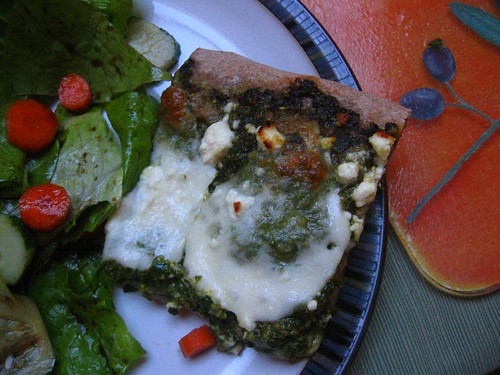
We used our pesto on wholegrain pizza dough with some fresh mozzarella and a little feta, served, of course, with a big leafy salad on the side.

Tuesday, July 29, 2008

Confetti Salad

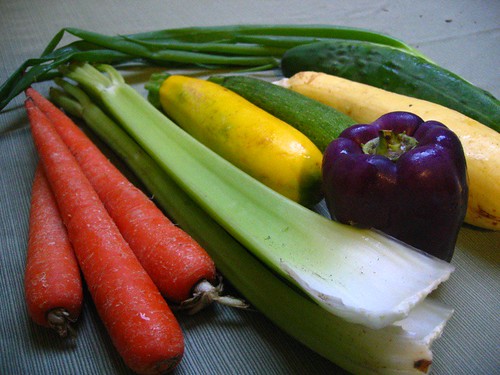
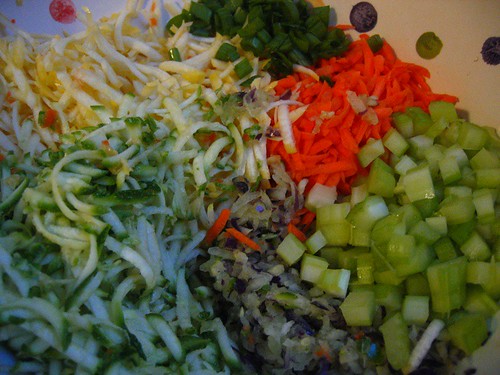
For my first meal from this week's amazing bounty, I decided to try The New Moosewood Cookbook's raw vegetable salad. Basically, the idea is that any vegetable can be eaten raw if you chop it small enough, so grab whatever you have -- the more different kinds and colors, the better -- and mince or grate them all. I picked squash, zucchini, scallions, and purple pepper from our CSA box, as well as carrots and celery that we had on hand. (A cucumber is pictured, but I didn't end up using it.) The celery was the only thing I minced manually; I used the kitchen shears on the scallions and threw everything else in to my trusty salad shooter. Consequently, this salad took about five minutes to prepare.

See how pretty it looks with all the different colors? Like confetti. Once everything is chopped or grated, just stir it up and add the salad dressing of your choice.

I decided to take another page from Moosewood and use their green salad dressing. It's a slightly odd mix of fresh herbs, spinach (or kale, in my case, since we didn't have spinach), lemon juice, and buttermilk. It was fresh and tangy and worked well with the raw veggies. The overall effect was very light and tasty; there's something about this salad that reminds me of fresh salsa, even though it's not spicy. It would make an incredible burrito filling -- I'm thinking with mashed pink pintos and a little queso blanco in a whole wheat tortilla. Yum!

Saturday, June 28, 2008

super quick and easy dinner

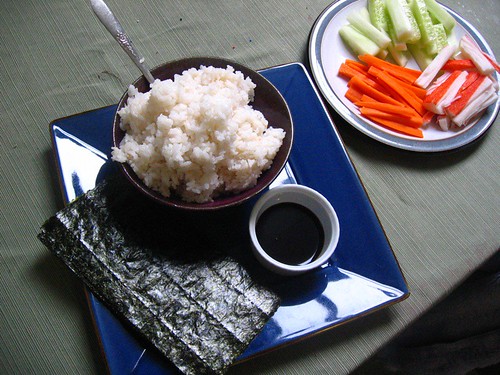
Yesterday, Dan and I wanted to catch a movie at 7:00, so we didn't have much time between when he got home from work and when we needed to head out again. I decided temaki (hand-rolled sushi) would be a good dinner choice. I cooked the rice in the afternoon (I work from home) and seasoned it with a mix of one part salt, one part sugar, and five parts rice vinegar, as described in this book.

When Dan got home, I sliced some cucumbers, carrots, and crab stick for fillings, and set out some nori (dried seaweed) and soy sauce for dipping. Temaki are easy to make and particularly refreshing on a warm day, especially if you have a rice cooker and don't have to turn on the stove. You just grab a sheet of nori, put on a scoop of rice, add whatever fillings you want, and roll it up into a cone.

Yum!


(Yes, my husband proudly rocks the handlebar mustache.)

Tuesday, June 24, 2008

by special request

Strawberry soup, because my hubby asked for it.

Just strawberries, yogurt, and orange juice blended together. Really more of a thin smoothie, served with a spoon. I made a simple salad (lettuce, carrots, apples, cheddar) and we ate while watching Goodnight Burbank.

That didn't last long.

It was a very simple meal, but Dan loved it. It's nice that he's so easy to please.

Saturday, June 21, 2008

spinach, two ways


After a couple of days of salads for dinner, I was ready for something a little different. I decided to tackle the rather large bag of spinach. I'm not a huge spinach eater; I do use frozen spinach a lot in the winter when fresh, local greens aren't available, but given the option, I'll usually choose other greens. The one exception is this amazing pomegranate and spinach salad recipe from The Armenian Table, an excellent cookbook that I received as a Christmas present from my (Armenian) mother-in-law. That salad was so wonderful I must have made it about ten times in three weeks, and I went through withdrawal when the pomegranates disappeared from the grocery store shelves.

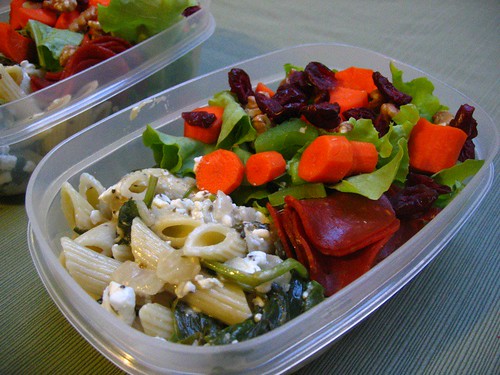
Anyway, back to the spinach - I decided to use some of it for a pasta dish. I sauteed it with some onions and garlic in a little olive oil, then tossed it with penne and (for lack of ricotta) cottage cheese. A little grated asiago on top finished it off. It was an okay supper, but not quite as good as I expected it to be. I think next time it would be better with feta. (Doesn't that sound like a tagline? "Everything's betta with feta!")

We had some leftover, so I put it in our bentos the next day, along with a simple salad (lettuce, carrots, walnuts, dried cranberries) and some turkey pepperoni for protein.

By the next night, Thursday, I was really sick of salads and terrified of how much spinach remained. I decided it could only be handled with cheese. Bring on the calzones!

Whole-wheat pizza dough from the Coop is reasonably healthy but probably did little to counteract the cheesezilla action as seen in this picture. Four different cheeses combined to make this one tasty calzone: mozzarella, provolone, ricotta, and feta. At least they were all low-fat cheeses, but the cumulative fat factor = not so great. Still, there was (some) spinach in there. We added a little marinara for dipping and had one deliciously cheesy meal.

Now for the bad news: we STILL have spinach left from week one, and today, in box number two, we received more. Lots more. Probably like five pounds more. And there's only two of us (that are human). Unless Ashley the cat takes a liking to fresh greens, I think we're stuck with a spinach surplus.

Wednesday, June 18, 2008

salad, take two

Now this salad, while similar to the last one, was much more satisfying. In fact, it was downright hearty. I was so stuffed that I didn't even eat dessert (a VERY RARE occurrence).

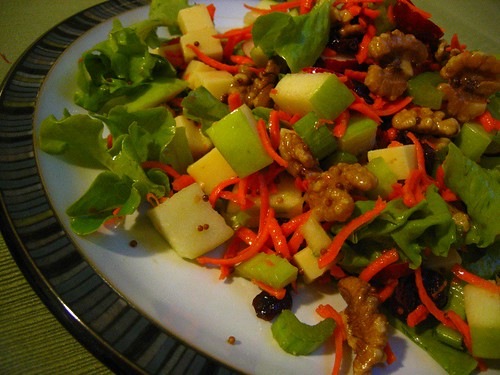
I used the enormous mutant lettuce as a base, and topped it with celery, carrots, Granny Smith apples, cheddar cheese, dried cranberries, and walnuts. It's dressed with my mustard vinaigrette, as usual. This time I shredded the carrots using our Salad Shooter. It's one of those weird little gadgets that I probably wouldn't have purchased on my own, but we received one as a gift from my sister-in-law and it has turned out to be one of the best gifts I've ever received. It's amazingly fast and easy, and I use it constantly. It takes so much of the work out of the whole shredding process - my grater is pretty much obsolete at this point.Post Options

Tuesday, June 17, 2008


Here's the first of many salads that we will eat this week. I used some of the colossal lettuce as well as some mixed greens (baby spinach, mustard, arugula, and several more that I can't identify). This night, I was craving all things crunchy, so I loaded up on celery, carrots, radishes, cucumbers, and sunflower seeds. I used my basic mustard vinaigrette (salt, dried mustard, champagne vinegar, and olive oil) that I put on almost all salads.

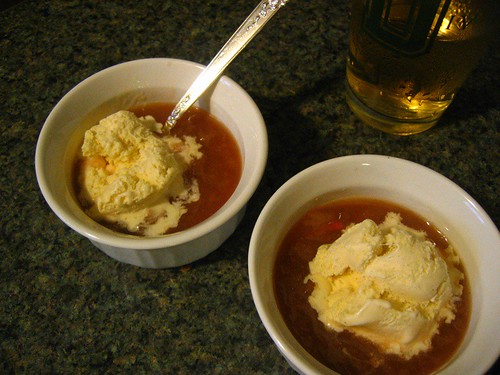
It was a tasty salad, but not quite filling enough. Thankfully, we had the rhubarb for a delicious dessert. I used Phat Duck's compote recipe, made with orange liqueur, and it was fantastic! The liqueur and the touch of butter really enhanced the natural flavor of the rhubarb. It was a little sweet for my liking, though, so next time I would cut the sugar down to a scant half a cup.


When I have rhubarb, I pretty much do a compote (with or without strawberries) or sometimes a crisp. My grandmother makes wonderful strawberry-rhubarb pies. But I'd like to do something different with it - do you have any suggestions for unusual rhubarb recipes? If so, please post in the comments! I'd love some new ideas.

By the way, that nice cold glass you see in the corner of the compote photo is spiced rum and ginger beer, a favorite drink of mine for summer (so refreshing!).